Welcome!

By registering with us, you'll be able to discuss, share and message with other members of our community.

SignUp Now!

The Loom Building Thread

JoeLanger

Official FDOC Trackday Ballast
Moderator
Event Organiser
Joined
Jan 7, 2018
Messages
2,569
Planning:

Thought I'd go into a bit of depth about the planning phase of the Wiring:

Most of you know I'm a Control and Automation Engineer, so while I don't do automotive or design, this is kinda right up my street. but I went on a free webinar from HP Academy, and decided to pay for the full motorsport course, was about £400 main reason for me was to see the materials they recommended and the motorsport course taught how to do concentric twisting. this was 100% worth it, and I haven't completed all the modules.

I actually did it the long way, most place suggest to measure all the lengths and then build it on a board
I decided I'd build from front to back so that I could test fit each stage, and if there was an error it's easier to fix rather than rebuild the whole loom
If I was doing it again I'd build of a board, but that's only coz I know al the measurements now, I'd probably do it the same way if it was for a different car

The first step is identifying everything your loom needs the way I did this was when removing my old loom, I noted down each connector and each wire, that way I knew that as a minimum those items were needed, then I went through the link manual ID'ing everything else I needed / wanted on top of that.
e.g. Hold power function requires quite a few IO, all listed in the link manual
Link to IO spreadsheet - this one is only an initial draft (I forgot all the colours) and the below document is actually more up to date
Everything was a development as I went through the entire process leading up to the final doc.

Next all the branch lengths, I did this with rope and wire and stuff as you can see above.
I was planning on updating my loom lengths document but, I got too eager and have already fitted it now
Screenshot below of the draft I did, actual product differed slightly with branches and spares, and some lengths so please don't use this to model your own loom on.

1616610750666.png


Those of you might notice, I've removed the alternator loom and integrated all it's parts to go through the bulkhead and integrate into the Link ECU
My plan is to have to only pull through the body side and the engine can be removed with loom still attached.

The next part of the plan is the connection diagram, I was diagram it's just a spreadsheet saying from and to (as that's all the loom is) this is basically the final and Master doc for the whole thing
Link to Connection Spreadsheet (final)
This one obviously took the most time and you have to know exactly how to wire everything
The interfaces, bosy dash, etc this is were I'm going to tie it into the body loom, since everything doesn't go to the ECU e.g REVL

So first draft of that done, I then created a wire and connector list, mainly to assist in buying parts
Link to Wire & Connector List
So I knew the all the specs of each wire, I basically added them up giving me a total amount of wire to buy, since spec55 is over £1 per m I wanted to order just the right amount rather than a 100m roll ad having 70m left over.
I of course miscalculated this by not accounting for ECU to dash e.g. wires, running out of white wire, wasn't a big deal but, and I made some errors on what colour was what in the plan so this effected my stock.
also since I knew what wires were going to be in each branch I could calculate the diameter of each branch, these then allows me to buy all the right amount of DR25, e.g I knew the main branch was going to be 15mm diameter, so knew I'd need 1" DR25
This largely worked, and while I obviously over ordered slightly, and made a few mistakes, it worked out pretty well and I don't have that much stuff left over.
Connector list is just that all the part numbers etc. There are a few missing, I know these just haven't updated it. also I have spares if anyone is stuck.

So to start building I'd take a connector measure out the right cables, e.g. ECT was green and white, added 100mm for spare this way I wasn't wasting any.
And then just built each branch backwards test fitting each time and building on the car making sure it all fit.

1616610761364.png


So yeah easy as that! this took a lot of graft, I spent all night after work on the planning most nights and was all I did for quite some time, first made the connection spreadsheet in October, and finished in January.
 
Last edited:
Heatshrink

Yeah DR25 is what I used.
You can see on mine I used Raychem SCL on the ends, so this is a dual wall heat shrink, in that it has an outer and inner layer. The inner layer is an epoxy that goes liquid with the heat gun, so this seals up the ends nicely and tidy's all the loom up.
It's also very rigid so provides a nice bit of support for the ends and all the branch points

DR25 is 2:1
SCL is 3:1

So for DR25 you want to shrink it as much as possible so the wall thickness increases as much as possible, also to make it slide on easier. e.g. if your loom branch is 10mm in diameter (like 20 wires) then you double it, so 20mm, and that's the size of DR25 you use. That's actually an awkward size as the sizes are 3/4 and then 1", so 19mm and 25mm. one would think 19 is too small and 25 to big. so you need to think if you shrink 25mm then it would be 12.5, so that means 2.5mm flopping about, so the best solution is probably the 3/4 stuff.
Nice long winded example for you there!

For SCL its the opposite, you want it to shrink it as little as possible so it holds tight, so for your 10mm loom branch, you need to measure it again as its probably more like 12mm now with the DR25, you'll prob wanna use 1/2 inch stuff as that should fit over the DR25 @ 12.7mm, if it won't fit then the next size up, which I think is 3/4, so that would shrink to 6mm so still shrinks plenty, but the 1/2 would be better if it fits

I also used some HFT5000 which has more of an abrasion resistance, this is actually really nice stuff, you can see it on my loom on the bits that go over the gearbox, got like a square pattern on it. would have like to have used more of this actually, I put it over the DR25 though, not sure if it would be OK on it's own, probably would.

And some clear heatshrink, RT-375 over the labels, this is 2:1

They're both available in imperial increment sizes, SCL only up to 1" and DR25 goes bigger but you won't need more than 1" I don't think.

I bought mine from multiple places, ordering small QTY's is awkward and one place didn't stock the full range. I needed the full range of sizes too for a full loom.
RS have it all but not in small QTY's, good to see what's available and the datasheets
https://www.hilltop-products.co.uk/ is probably best place for DR25
they sell SCL but not all sizes
I actually bought all my DR25 from milspecwiring.com in the states, the sell it by the foot and I calculated exactly how much I needed.
I got my SCL from Mouser as first point of call then RS
 
Last edited:
My Loom:

Started planning for this in October, and had the loom finished mid January, I don't think that's too bad considering.
Hardest part of the whole project was definitely sourcing parts, planning and doing the connection diagrams wasn't that bad but obviously time consuming. and building it is just going through the motions following the plan.
I bought all new connectors and used Spec 55 wire, to give an idea of scale I spent easy over £1000 on just parts, that wire heat shrink connectors pins, tape, new tools, connector seals are a bit of a nightmare with spec 55 wire as it's so small any "kits" usually the seals are too big so needed everything separate.
I remember sumitomo seals was holding the job up as the small ones I could only get on a 4 week lead time from wherever it was abroad.

Started planning for this in October, and had the loom finished mid January, I don't think that's too bad considering.

20201205_184928.jpg


20201121_203414.jpg


20201206_133441.jpg


20201206_140722.jpg


20201202_110942.jpg


20210101_201256.jpg


20210109_140615.jpg


20210109_140620.jpg


20210109_140643.jpg


20210109_140646.jpg
 
Last edited:
Great thread, lots of good info!
Did you reuse the stock FD firewall grommet or did you get something aftermarket?
 
Great thread, lots of good info!
Did you reuse the stock FD firewall grommet or did you get something aftermarket?
I was planning to re-use but mines gone, and couldn't find a second-hand one so I found someone in US selling new ones so bought that, shipping was expensive though. couldn't find an easy aftermarket option, I'll update the links

Nice one Joe, them german genes are useful for more than just gassing people after all
I don't think gassing would be as efficient these days
 
Wire and Fuse Sizing

So this all in the wiring regs but 230Vac is very different to 12Vdc in a car, volt drop is more of a consideration, that is why the regs will say 1.5mm2 is good for 16A but the chart below is half of that
Anything over about 5m you should go up a size because of volt drop, but this shouldn't be the case in a car.

1616614003121.png


Fuses should be 150% above the nominal current

People will tell you to use V=IR to calculate current, This is not true, you need power in Watts (W) to calculate the nominal current, using the formula P=VI.
This is because most loads are not just resistive they are inductive (e.g. coils on injectors), building the magnetic field in the coil is what's pulling the amps, not the resistance of the coils. This is seen in real life when you're trying to start your car with low battery voltage, it's sluggish, the starter motor still needs the same amount of power but with less volts available it pulls more amps, this can trip fuses on in start case melt cables, or just not start. if you apply V=IR here it doesn't work. Just one to be aware of when trying to calculate nominal current.
 
Power

I half drew this wiring diagram, this is accurate with the relays and fuses but didn't evolve it past that

1616614977844.png


This is taken from the link manual for the hold power wiring, and the starter wiring, I've just then added how I'm going to power my components

Then made the fusebox for the EFI system, my plan is to bodge this to get working (put power on it and connect to loom) and will re-do the dash loom as a next job.

20201106_123936.jpg
 
A great thread, I built a similar engine loom a while ago. The concentric winding of the cables was fun!

I brought the bulk of my spec55 wire, DR-25 heatshrink and mouldable boots from https://www.is-rayfast.com I was able to buy the spec 55 wire by the metre in various colours. I also used some of the other suppliers identified above for the smaller quantities of wire and heatshrink as I seem to remember is-rayfast having a minimum order.

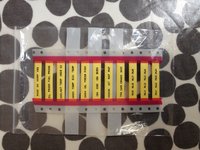
If you want custom heatshrink labels then I’d suggest the following as it was cheaper than buying the printer for it, just don’t forget the clear heatshrink to go over it.

https://www.simtekuk.co.uk/product.php/custom_heat_shrink_labels/?k=:::2350538

Wire 2 (1280x960).jpg

Another good resource for anyone looking is: https://www.rbracing-rsr.com/wiring_ecu.html
Although not as well structured as your write up imo.
I ended up using that as well, plus I also found a NASA wiring specification on wiring looms which had the same principles but was definitely OTT.
 
Excellent write-up. I used the standard automotive thin-wall wire when I did my loom. I could get it in a huge array of colours and it wasn't too expensive.

The modular holders are great, but a word of warning. If you get anything wrong on the smaller stuff (especially the small relays) you will really struggle to extract the connectors. I was never able to find anybody willing to sell me extraction tools, let alone cheap ones.
 
To add another data point, when I did my loom I just used one colour (white) of wire. It required a lot of care, and even then I got a couple of wires to the wrong pin, but it wasn't anywhere near as bad as you woukd think. However if you are using full heatshrink along the loom you can run into trouble- a dozen cables of the same colour popping out of the end of heatshrink means a lot of continuity testing to work out what is what. As I built my loom on the car I ended up using fabric loom wrap, as you can wrap once the wires are in place- originally tried nylon braid for low temp/ high abrasion areas but that quickly went by the wayside due to it being crap.
In my case I used new connectors throughout and used deutsch dt/ dtm- basis being that uniformity of pins meant I was less likely to run out of them, plus easy to define and change as required. In actuality this was partly true as the standard connectors are easy to use. However if you put a pin in the wrong hole on a bulkhead connector you are going to struggle to get the thing out again. If you anyone does go down the route of using new connectors, would recommend having a standard layout- for me pin 1 was ground, pin 2 was +ve, pin 3 was signal etc. Saves a lot of time/ head scratching etc. Sometime you have your hand forced (set layout on a bit of kit like dbw etc) but in general it works pretty well.
Grounds/ 12v/5v feed lines will inevitably end up with a lot of splicing, if at all possible make sure your splices are good- i had my horn sounding when using the wipers/water pump/ fan due to a dodgy ground splice...
Other things I have worked out the hard way- brush up on pullup/ pull down resistors if you are trying to do any kind of ecu shenanigans, and it pays to have spare canbus connectors if you are using datastreams. Oh, think about which side you want to be male/ female on connectors- sometimes if you have say 2 4pin connectors in close proximity it can help to have them switched around (so one might be male on ecu side and other be female on ecu side to prevent incorrect connecting, but in other areas you might want to prioritise having them set up so I you can't inadvertently short the power/ ground on the pins when tracing issues- i had my wipers on a dt connector and when I was checking ground my multimeter probe accidently touched both 12v and gnd pins at the sametime- blew the switchgear. If I had the male/ female parts of the connector the other way round i wouldn't have been able to do it.
As you can tell, I have had some painful and expensive issues on the way- hopefully I can help prevent others having the same headaches!
 
Back
Top