

- Joined
- Apr 7, 2018
- Messages
- 39
After a successful repair of an F110 Repay/CPU i decided to put together a simple how-to tutorial on a common repair with this unit. its provided as a guide and if you make things worse, its your own fault. This repair also does not cover all modes of failure. just one.
The repair is very do-able with simple soldiering skills and a few basic bits of equipment (Soldiering iron with thin tip, flux, solder and solder braid) it cost me an hours effort and £4
What does it do:
The F110 consists of two elements. A flasher unit that controls the indicators and a "CPU" that controls a whole hosts of things from the shift buzzer, electric windows, seat light, etc.
Where is it:
The F110 is located under the drivers foot well, right hand side and is secured by a single nut. its easily identifiable by the big white wording "F110"
The Fault:
like most things on these cars they can be pushing well over 20 years old now. components fail, capacitors more so than others. Especially if helped on by other conditions. once these fail all kind of weird and wonderful things can happen. For me a flashing seat belt light and windows that worked in time to the flashes.
The Repair:
Quite simply take the F110 unit out of the car, on the back of it is a single screw, this is the only screw holding the back. Pry the cover off from the sides tabs first and then the top near the mounting lug. if done correctly this will allow the back cover to be slid free without any damage to the plastics.
The circuit board is now free and can be removed,
In my case the damage was obvious, C7 had lost its guts and in the process corroded the tracks on the underside (Yep thats rust!), lucky for me they were all still solid after testing and cleaning up.

de-solder the offending component and replace, I swapped them all. each capacitor is named on the board C1,2,3 etc there is a white notch on the marking. this indicates the negative side, though you can't mess up if you replace one at a time and take note of the existing ones orientation.
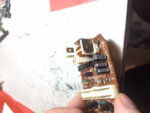
Bellow are the capacitor types and their location, go for the higher temperature ones as they are generally a better component.
C1 - 47UF, 16V
C2 - 35UF 16V
C3 - 220UF 16V
C4 -0.47UF(470NF) 50V
C5 - 22UF 16V (Bipolar)
C6 - 3.3UF 50V
C7 -33UF 16V
The repair is very do-able with simple soldiering skills and a few basic bits of equipment (Soldiering iron with thin tip, flux, solder and solder braid) it cost me an hours effort and £4
What does it do:
The F110 consists of two elements. A flasher unit that controls the indicators and a "CPU" that controls a whole hosts of things from the shift buzzer, electric windows, seat light, etc.
Where is it:
The F110 is located under the drivers foot well, right hand side and is secured by a single nut. its easily identifiable by the big white wording "F110"
The Fault:
like most things on these cars they can be pushing well over 20 years old now. components fail, capacitors more so than others. Especially if helped on by other conditions. once these fail all kind of weird and wonderful things can happen. For me a flashing seat belt light and windows that worked in time to the flashes.
The Repair:
Quite simply take the F110 unit out of the car, on the back of it is a single screw, this is the only screw holding the back. Pry the cover off from the sides tabs first and then the top near the mounting lug. if done correctly this will allow the back cover to be slid free without any damage to the plastics.
The circuit board is now free and can be removed,
In my case the damage was obvious, C7 had lost its guts and in the process corroded the tracks on the underside (Yep thats rust!), lucky for me they were all still solid after testing and cleaning up.
de-solder the offending component and replace, I swapped them all. each capacitor is named on the board C1,2,3 etc there is a white notch on the marking. this indicates the negative side, though you can't mess up if you replace one at a time and take note of the existing ones orientation.
Bellow are the capacitor types and their location, go for the higher temperature ones as they are generally a better component.
C1 - 47UF, 16V
C2 - 35UF 16V
C3 - 220UF 16V
C4 -0.47UF(470NF) 50V
C5 - 22UF 16V (Bipolar)
C6 - 3.3UF 50V
C7 -33UF 16V


